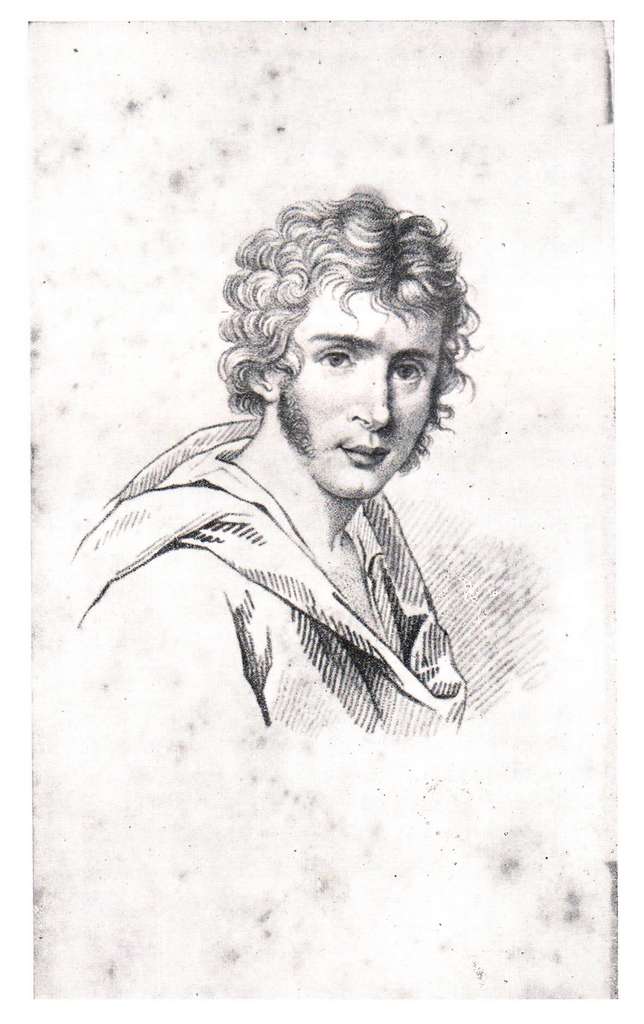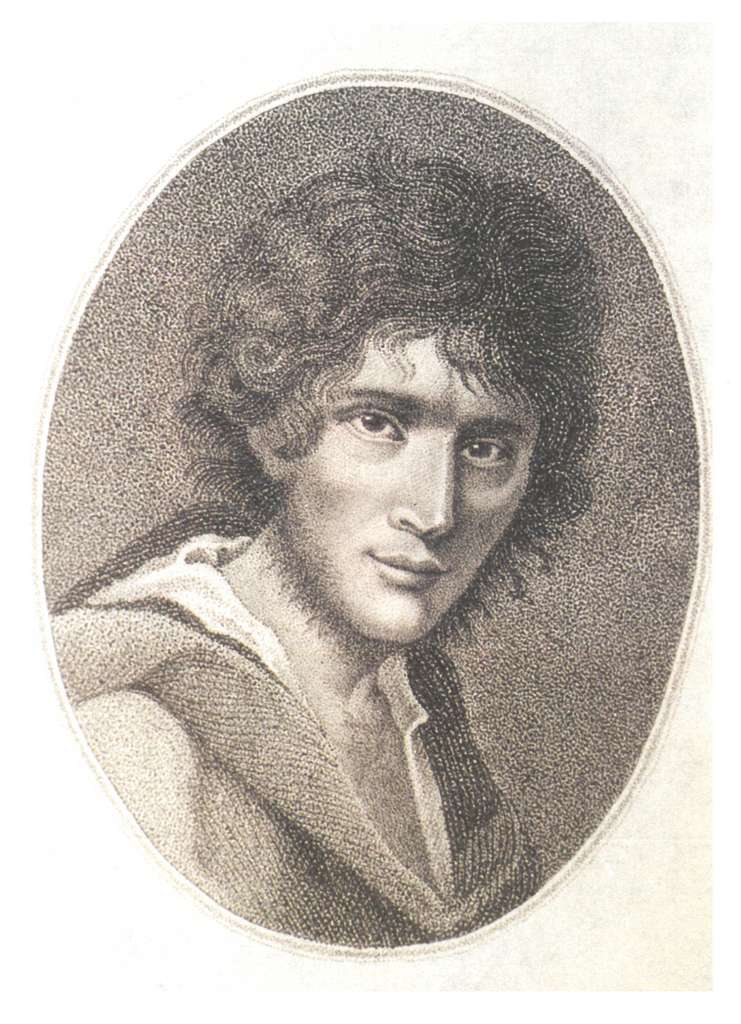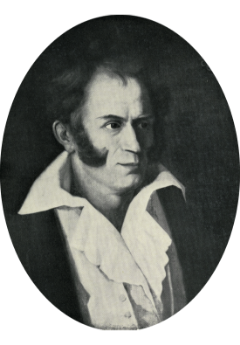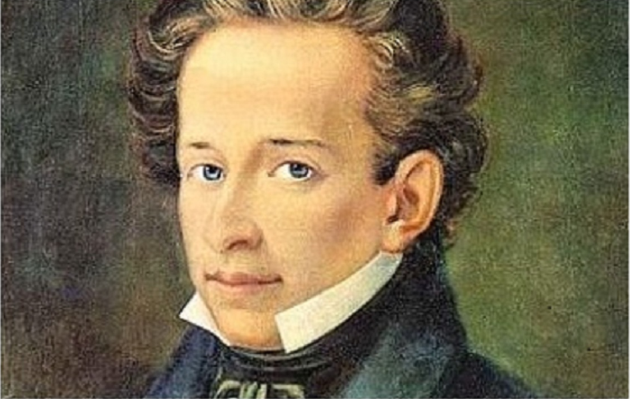
The poet Ugo-Niccolò Foscolo (Hellenised as Ougos Foskolos) was born in Zakynthos in 1778, the son of the Venetian-Corfiot doctor Andrea Foscolo and the Greek Diamantina Spathi. He lived in Zakynthos until the age of sixteen and was fortunate to have as his teacher the poet Antonio Martelaos, who instilled in him a love of Greece. In 1788 his father died of tuberculosis and his mother, pressed by financial hardship, decided to settle in Venice, temporarily leaving Nicolò (Ugo) in Zakynthos. In 1794 Nicolò followed her; after settling in Italy he added the name Ugo.
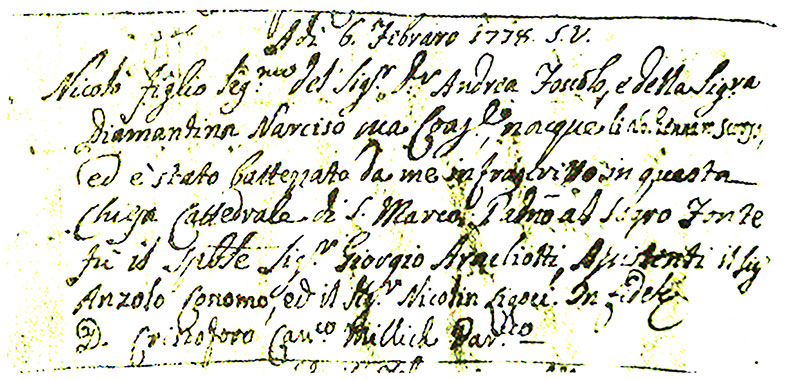 Birth certificate of Nicolaos – Ugo Foscolo
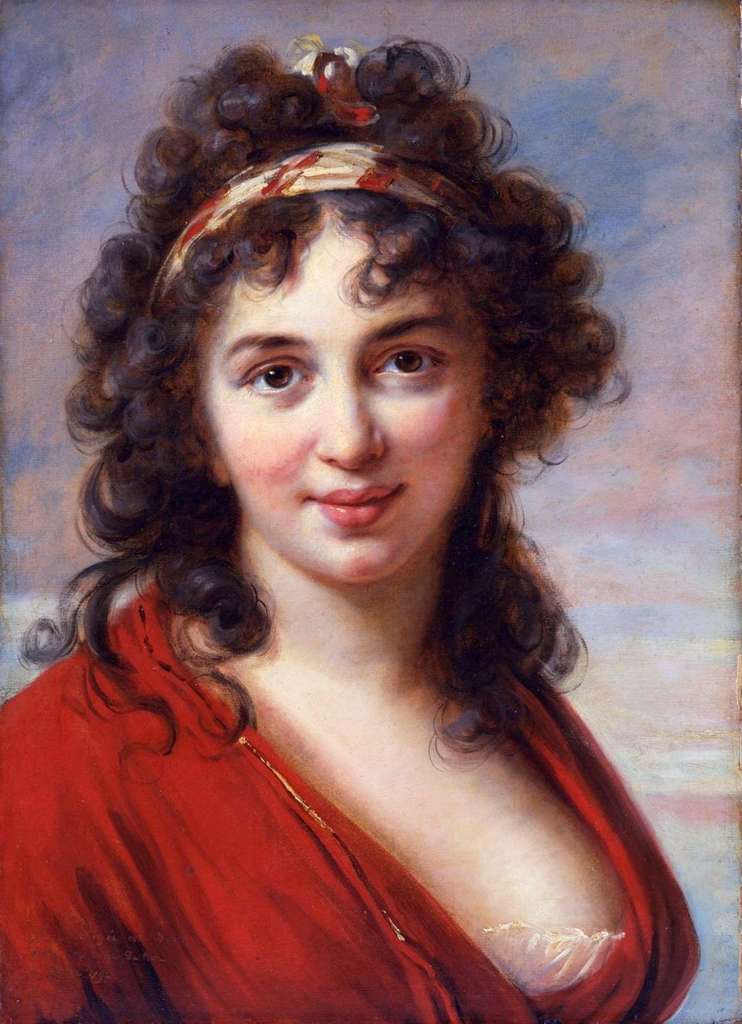
In Venice Foscolo attended a Jesuit school, studied the classics and entered literary circles, where he met Countess Isabella Teotochi Albrizzi, with whom he formed a romantic attachment. At the age of 19, in 1797, he gained fame with the success of his tragedy Thyestes.
That same year he enlisted in the army and, enthused by the victory of the French troops over the Venetian Republic, dedicated an ode “To the Liberator Bonaparte”. He was later disappointed by the cession of Venetian territories to the Austrians under the Treaty of Campo Formio and denounced Napoleon’s stance in his novel The Last Letters of Jacopo Ortis. Nevertheless, when the Austrians invaded Italy in 1799, he fought on the side of the French.
In 1805, after a brief relationship with the Englishwoman Sophia Hamilton, his daughter Floriana was born. In 1807 he became famous by publishing Of the Sepulchres (Dei Sepolcri), and in 1808 he was appointed Professor of Rhetoric at the University of Pavia, from which he was dismissed immediately after his inaugural lecture, as his positions were deemed radical. Two years later he wrote the tragedy Ajax, which was staged at La Scala in Milan, but the performances were banned because it was thought to turn against Napoleon.
Thereafter he wandered through Milan and Florence, where in 1812 he met Andreas Kalvos and became his secretary, later to Switzerland, and finally in 1816, with the help of Ioannis Kapodistrias, to England. There English liberals gave him a warm welcome, but he was soon isolated because of his difficult character and dissolute life. In London he reunited with his daughter, mismanaged his finances and survived in hardship by giving lessons and writing for periodicals.
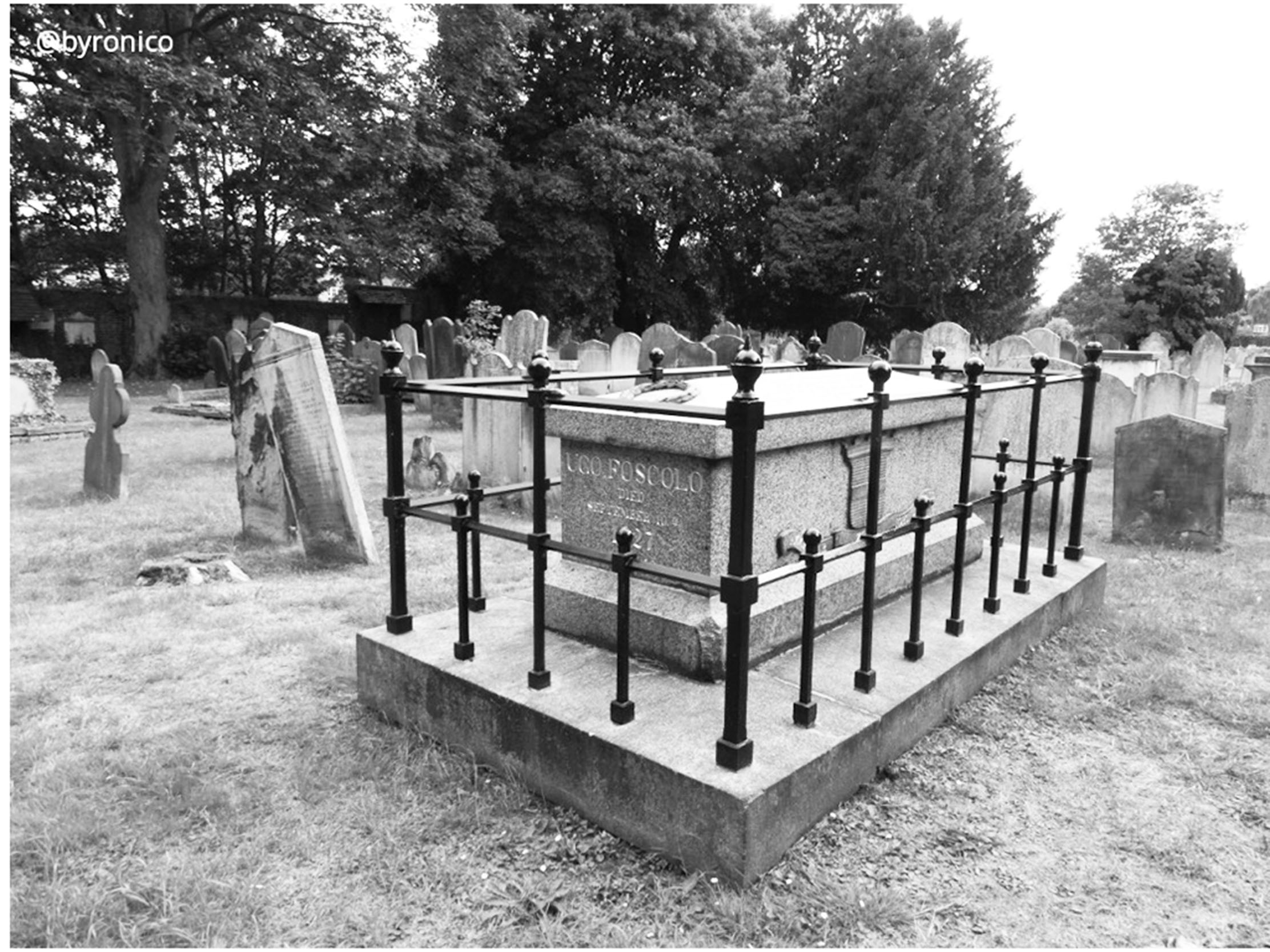
In 1824, in correspondence with Alexandros Mavrokordatos, he expressed the wish to go to revolutionary Greece, which he ultimately could not do because of his failing health. Ugo Foscolo died in London on 10 September 1827, at the age of 49. His writings were preserved by his daughter Floriana, who died shortly after her father.
When news of Foscolo’s death reached Zakynthos, a memorial service was held in the Church of Saint Mark, where Dionysios Solomos delivered the famous eulogy for Ugo Foscolo (Elogio di Ugo Foscolo) and the poet Dionysis Gryparis recited an elegy of his own.
After the unification of Italy, in 1871, his remains were transferred to Florence and buried in the Italian Pantheon, in the Basilica of Santa Croce, beside eminent Italians such as Michelangelo, Machiavelli and Galileo.
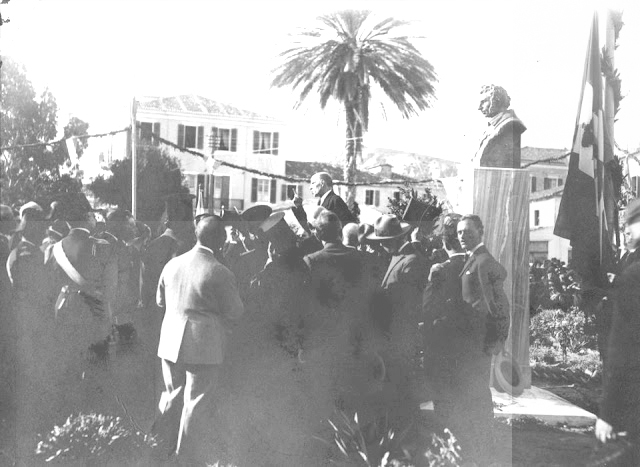
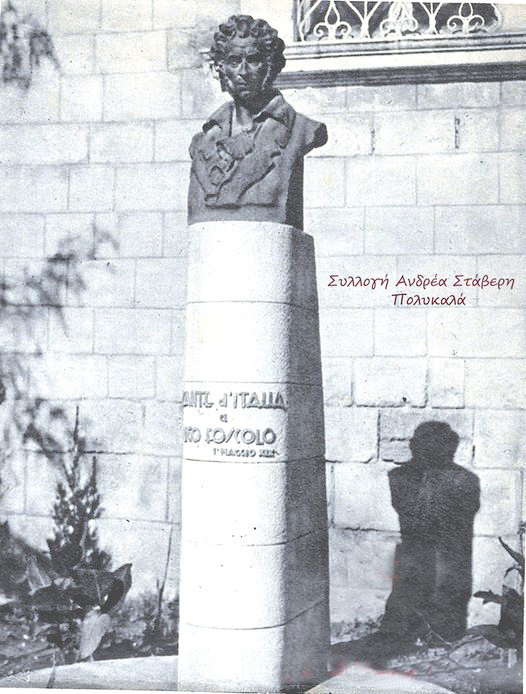
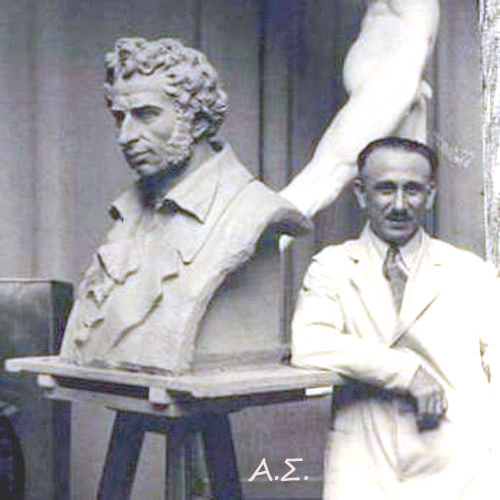
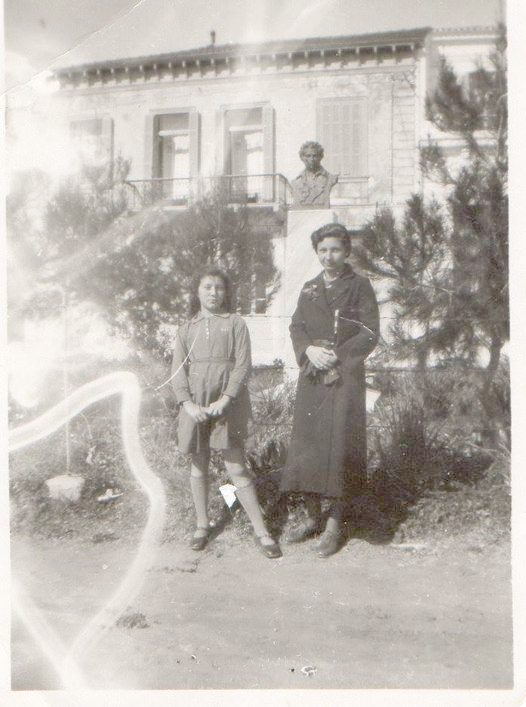
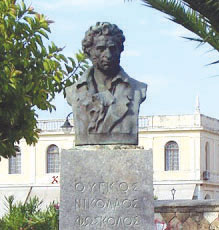
In Zakynthos his statue was erected in 1927, a work by the sculptor Konstantinos Dimitriadis, in a small garden in Solomos Square, next to the statue of the national poet.
Ugo Foscolo was a multifaceted personality: poet, novelist, essayist, playwright and at the same time a political fighter, a combatant with the French republicans, a liberal, a dreamer, inspired by fervent patriotism and anti-tyrannical feelings, impulsive and uncompromising. In Italy he is regarded as the foremost representative of Classicism and one of the principal founders of modern Italian literature. In Greece Foscolo remains largely unknown, but in the Ionian Islands his works received several translations from early on and were greatly loved.